
If you were born in 1953, you turn 73 during 2026, and 2026 is the first year for which the IRS requires a withdrawal from your traditional IRA, SEP or SIMPLE IRA, 401(k), 403(b), or 457 plan. The rule gives you a choice on the first one, and the choice is worth thinking through.
The two deadlines
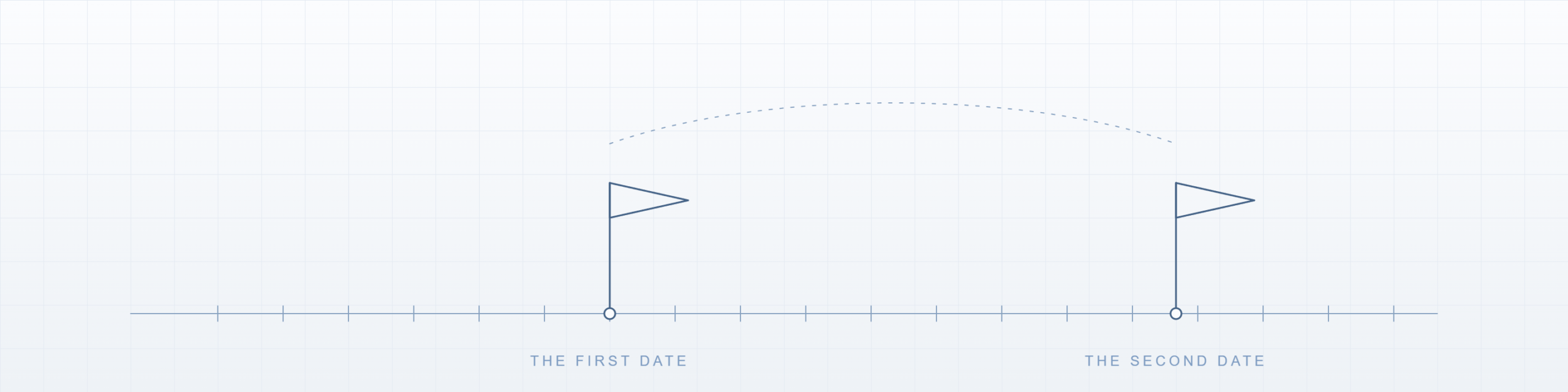
Your first required minimum distribution is for 2026, but the law lets you defer it to April 1, 2027. Every later one is due by December 31 of its own year. So if you defer, you take the 2026 distribution and the 2027 distribution in the same calendar year, and both land on your 2027 return.
Two distributions in one year is not always wrong. It is wrong when it pushes 2027 income into a higher bracket, over a Medicare income threshold, or into a higher share of Social Security being taxed. It can be right when 2026 is already a high-income year, for example the year you sold a business or took a final bonus, and 2027 will be quieter. The question is which of the two years has room.
The Medicare point deserves its own sentence. Your 2029 Part B and Part D premiums will be set from your 2027 return. A doubled-up year does not just cost tax; it can cost a year of higher premiums two years later.
How much
Divide the account balance on December 31, 2025 by the factor for your age from the IRS Uniform Lifetime Table. At 73 the factor is 26.5. A $500,000 balance therefore requires $18,868 for 2026, and the balance on December 31, 2026 sets the 2027 figure at a factor of 25.5. If your spouse is your sole beneficiary and more than ten years younger, a different table applies and the figure is smaller. The RMD calculator on the Calculators page runs both.
The withdrawal is computed account by account. IRAs can be aggregated and taken from any one of them; 401(k) and 403(b) balances cannot be satisfied from an IRA.
Three things people get wrong
- Roth accounts. A Roth IRA has no required distribution while you are alive, and since 2024 neither does a designated Roth account inside a 401(k) or 403(b). If the plan you are looking at is Roth, nothing is due.
- Still working. If you are still employed by the sponsor of a 401(k) or 403(b) and you own less than 5% of the business, that plan can wait until you retire. This exception never applies to an IRA.
- Younger cohorts. If you were born in 1960 or later, your age is 75, not 73. People born in 1959 sit in a gap between two provisions of the law; Treasury has proposed 73 but has not finalized it. There is time, because that group reaches 73 in 2032.
What a miss costs
The excise tax on a missed or short distribution is 25% of the shortfall, reduced to 10% if you correct it by the end of the second year after the year it was due. Custodians flag on Form 5498 that a distribution is required for the year, so a miss is visible.
The New Jersey angle
New Jersey taxes IRA withdrawals, and the taxable part counts toward the $150,000 total income test that decides whether you keep the state pension exclusion at all. A doubled-up year can push a couple from a full exclusion to none. Social Security is not in that test, and a public pension from PERS or TPAF is, so run the year before you choose. The pension exclusion checker on the Calculators page shows where a given total income lands.
What to do now
Pull the December 31, 2025 balances for every pre-tax account, compute the 2026 figure, and estimate 2026 and 2027 income with and without deferral. If you would rather someone did that with you, start here.
Reviewed September 12, 2026. Sources: IRS, Retirement plan and IRA required minimum distributions FAQs; Treasury Regulation section 1.401(a)(9)-9 (Uniform Lifetime Table); SECURE 2.0 Act sections 107 and 302.
This article is general educational information and is not tax advice. Distribution ages, tables and penalties are set by federal law and regulation and can change. Confirm your own figures with your custodian and your tax preparer before acting.
This page is general. Your situation is not.
The first distribution has two deadlines rather than one, and taking both in the same year can move you into a higher bracket. We can cover it in a short conversation, at no charge and with no obligation.
Book your Retirement ReviewNot ready to book? Answer a few questions about your situation, or send a message.
Booking is handled through Rosefinch Investment Advisors. North Jersey Retirement is not affiliated with, endorsed by, or sponsored by any government agency, retirement system, plan sponsor, or employer named on this site.