Author: Matthew Hunkele

  • The North Jersey estate where 13.5% goes to a tax people think was repealed

    The North Jersey estate where 13.5% goes to a tax people think was repealed

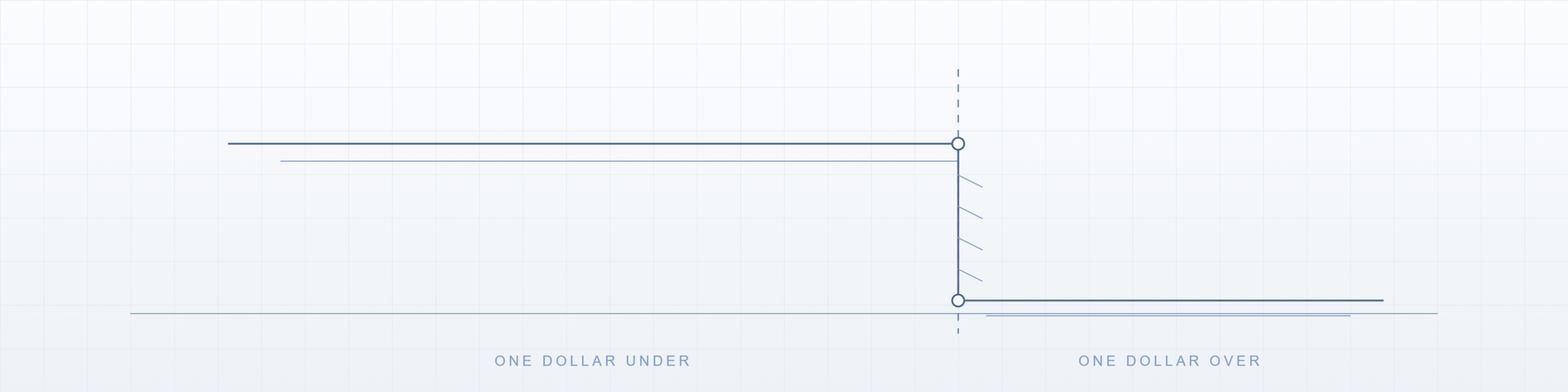
    A line drawing of a cliff edge: a level surface running to a marked threshold, then a sheer drop to a much lower shelf, labelled one dollar under and one dollar over.

    New Jersey does not tax estates. It taxes beneficiaries, by relationship, and it does not much care how large the estate is. The result is that two North Jersey households with identical balance sheets can face a New Jersey tax bill of zero or of a quarter of a million dollars, decided entirely by who is named on the paperwork.

    The household

    A couple in Morris County, no children, second death. The estate comes to $1,800,000: a paid-off house, two retirement accounts, and a brokerage account. The will divides it evenly three ways, between her sister and his two nephews, because those are the people they were closest to.

    BeneficiaryClassReceivesNew Jersey inheritance tax
    SisterC$600,000$63,250
    NephewD$600,000$90,000
    NephewD$600,000$90,000
    Total$1,800,000$243,250

    That is 13.5% of the estate, gone to a tax that most people in New Jersey believe was repealed. What was repealed was the estate tax. This is the other one.

    Had the same $1,800,000 gone to children instead, the New Jersey tax would have been zero, and there would have been no federal estate tax either, because the 2026 federal exclusion is $15,000,000 per person. Same money, same house, same accounts. Different names on the form.

    The sister is not in the same class as the nephews

    Siblings are Class C. The first $25,000 is exempt, and the rate is 11% up to $1,100,000, then 13%, then 14%, then 16% above $1,700,000. Nieces and nephews are Class D, which has no exemption at all and starts at 15%, rising to 16% above $700,000.

    A niece or nephew is not a descendant for this purpose, which surprises nearly everybody. Nor is a step-grandchild, an ex-spouse, a cousin, an aunt, or a partner who is not a registered domestic partner or civil union partner. All Class D. Meanwhile a son-in-law or daughter-in-law is Class C, which is better than most people expect.

    One detail is worth knowing because it is the rare piece of good news: the rate bands run per beneficiary, not per estate. Splitting the nephews’ $1,200,000 into two shares of $600,000 keeps both inside the 15% band and costs $180,000. Leaving the whole $1,200,000 to one nephew pushes $500,000 of it into the 16% band and costs $185,000. The difference is small here, and it grows with the numbers.

    The one asset New Jersey leaves alone

    Life insurance proceeds paid to a named beneficiary other than the estate are exempt from the New Jersey inheritance tax, and the exemption applies whatever class the beneficiary is in. A policy naming a nephew is exempt. A bequest of the same amount to the same nephew is taxed at 15%.

    If $600,000 of this estate had been life insurance with the nephews named on the policy rather than a brokerage account passing under the will, $90,000 of the tax would not exist. That is not a loophole and it is not aggressive. It is the statute.

    The same rule runs the other way and does more damage. Proceeds payable to the estate, the executor or the administrator are not exempt. They become an estate asset and are taxed by reference to whoever ends up receiving them. A beneficiary designation that was never updated, and therefore defaults to the estate, converts an exempt asset into a taxable one. It is the single most expensive blank line in New Jersey.

    And the tax after the tax

    The nephews inherit retirement accounts as part of their shares. They will pay the inheritance tax on the balance, and then income tax on every withdrawal, and a designated beneficiary who is not an eligible designated beneficiary must empty an inherited account within ten years. Two working adults in their forties will take that on top of their own income.

    Which points at the other thing the statute already allows. Qualified charities and religious, educational and medical institutions are Class E and pay no inheritance tax, and a charity receiving a traditional retirement account pays no income tax on it either. For a family that intends to leave something to charity anyway, the retirement account is the asset to leave, and the brokerage account is the one to leave to people.

    Where to look

    The New Jersey inheritance tax page sets out all five classes, the full rate schedules, what is and is not taxable, the lien that attaches whether or not tax is owed, and the L-8 and L-9 waivers that release accounts and real property. The inheritance tax calculator will work out the figure for any relationship and amount, including gifts pulled back under the three-year presumption. If you would like it worked through for your own beneficiaries, start here.

    Published September 13, 2026. The household is illustrative and is not a client. Figures computed with this site’s own inheritance tax calculator. Sources: New Jersey Division of Taxation, Form IT-R and its instructions, for the beneficiary classes, the Class C and Class D rate schedules, the Class C first $25,000 exemption, the Class D threshold, the life insurance exemption and the treatment of proceeds payable to the estate; the Division’s Inheritance and Estate Tax pages on the repeal of the estate tax for deaths on or after January 1, 2018; IRS Revenue Procedure 2025-32, section 4.14, for the 2026 federal basic exclusion amount.

    This article is general educational information and is not tax or legal advice. Inheritance tax questions turn on specific facts and on specific beneficiary relationships. Confirm current figures with the New Jersey Division of Taxation, and take estate planning decisions to an attorney who practices in this area.

    This page is general. Your situation is not.

    Which class a beneficiary falls into decides the rate, and the classes do not follow how close the relationship feels. We can cover it in a short conversation, at no charge and with no obligation.

    Book your Inheritance Tax ReviewNot ready to book? Answer a few questions about your situation, or send a message.

    Booking is handled through Rosefinch Investment Advisors. North Jersey Retirement is not affiliated with, endorsed by, or sponsored by any government agency, retirement system, plan sponsor, or employer named on this site.


  • New Jersey does ask what you were thinking: gifts in the last three years

    New Jersey does ask what you were thinking: gifts in the last three years

    A line drawing of three wrapped gifts standing on a timeline, with a dotted arc sweeping back from a marked date across all three, and a bracket beneath labelled three years before.

    New Jersey has no gift tax and no estate tax. It repealed the estate tax for anyone dying on or after January 1, 2018. What it kept is the inheritance tax, and the inheritance tax has a rule about gifts that works differently from anything in the states around it. New Jersey presumes that a gift made within three years of death was made in contemplation of death, and taxes it as though it had passed at death.

    The presumption, and what rebutting it involves

    The New Jersey resident return asks the question directly: did the decedent, within three years of the date of death, transfer property valued at $500 or more without receiving full consideration for it. Anything that answers yes is reported, and the presumption attaches.

    The presumption is rebuttable, and the part that matters is how. The instructions are specific: a claim that a transfer was not made in contemplation of death is supported by a supplemental affidavit setting out a detailed statement of the facts the claim rests on. That is a document somebody has to write, with facts in it, years after the event and after the person who could explain the gift has died. It is not an assertion on a form.

    There is a carve-out for ordinary life. The instructions say incidental and non-material transfers, such as birthday gifts, holiday presents, and gifts marking weddings, graduations and births, are generally not treated as transfers in contemplation of death. Nobody is going to tax a wedding check. A transfer of real property is a different conversation.

    New Jersey asks what you were thinking. New York does not

    This is worth drawing out, because households that straddle the river get it backwards in both directions.

    New York’s three-year rule is mechanical. It adds taxable gifts made in the last three years back into the estate, with a short list of exceptions, and intent plays no part in it. A gift made in perfect health for reasons unconnected to mortality is added back all the same, and there is nothing to rebut.

    New Jersey’s rule is a presumption about a state of mind. It can be displaced by evidence, which makes it softer in principle and more work in practice. The burden sits with the estate, and the estate is arguing about what somebody was thinking.

    There is also a difference in who pays. New York’s add-back enlarges the estate. New Jersey’s presumption taxes the person who received the gift, at the rate for their class, which means the same gift costs nothing to a child and 15% to a nephew.

    What it costs, by who received it

    Take a niece who inherits $300,000 and who was also given $100,000 during the three years before the death. Class D beneficiaries pay 15% on the first $700,000 and 16% above it. The inheritance alone produces $45,000 of tax. With the gift pulled back, the figure taxed is $400,000 and the tax is $60,000. The gift added $15,000, exactly 15% of what was given away, and giving it during life achieved nothing for tax.

    The same gift to a brother, who is Class C, adds $11,000 rather than $15,000, because Class C pays 11% in that range. To a child, it adds nothing, because Class A is exempt. The gift did not change. The relationship did.

    One consequence is worth stating plainly: for a family whose beneficiaries are all Class A, the three-year rule is an administrative question rather than a tax one. For a family leaving anything to siblings, nieces, nephews or friends, late gifting is not a strategy.

    The rule with no time limit at all

    The three years get the attention, and a different category catches more North Jersey families. A transfer intended to take effect at or after death is taxable whenever it was made. There is no three-year limit on it.

    The common version is the parent who deeds the house to a child but keeps the right to live in it. That is a retained life estate, and the house stays inside the tax no matter how many years pass. Where the child is Class A no tax follows, but the property is still part of the return, and the lien and waiver machinery still applies to it.

    Where to look

    The New Jersey inheritance tax page sets out the beneficiary classes, the rates, the exemptions, and the lien that exists whether or not any tax is owed. The inheritance tax calculator now takes gifts received in the last three years as a separate figure and shows what the presumption adds for that beneficiary’s class. If you would like it worked out with you, start here.

    Published September 13, 2026. Sources: New Jersey Division of Taxation, Form IT-R, Inheritance Tax Resident Return, and its instructions, on the three-year question, the $500 figure, the supplemental affidavit, the incidental gifts carve-out, transfers intended to take effect at or after death, and the Class C and Class D rate schedules; the Division’s Inheritance and Estate Tax pages on the repeal of the estate tax for deaths on or after January 1, 2018. The New York comparison is drawn from the Instructions for Form ET-706 and New York Tax Law section 954.

    This article is general educational information and is not tax or legal advice. Inheritance tax questions turn on specific facts and on specific beneficiary relationships. Confirm current figures with the New Jersey Division of Taxation, and take estate planning decisions to an attorney who practices in this area.

    This page is general. Your situation is not.

    The presumption reaches gifts made in the three years before death, and rebutting it depends on evidence gathered while there is still time. We can cover it in a short conversation, at no charge and with no obligation.

    Book your Inheritance Tax ReviewNot ready to book? Answer a few questions about your situation, or send a message.

    Booking is handled through Rosefinch Investment Advisors. North Jersey Retirement is not affiliated with, endorsed by, or sponsored by any government agency, retirement system, plan sponsor, or employer named on this site.

  • Medicare open enrollment starts October 15. The premium question was settled two years ago

    Medicare open enrollment starts October 15. The premium question was settled two years ago

    A line drawing of two calendars side by side, with a dotted arc reaching back from the later one to the earlier one, labelled the year that sets it and the year you pay it.

    Medicare’s annual election period runs from October 15 to December 7, and whatever you choose takes effect on January 1, 2027. It is the one window in the year when anyone on Medicare can switch a Medicare Advantage plan, move between Advantage and Original Medicare, or change a Part D drug plan. Plans re-price and re-tier their formularies every year, so the plan that was right in 2026 is not automatically right in 2027.

    What the window is for

    Three things. Check that your drugs are still on your plan’s formulary at the same tier, because that is where most of the surprise cost lives. Check that your doctors and hospital are still in network if you are on an Advantage plan. And compare the premium against the total cost, which for a drug plan means the deductible and the copays for what you actually take, not the monthly figure alone.

    If your health coverage in retirement comes from a former employer, the annual window that matters is the employer’s, not this one. Enrolling in a standalone Medicare plan on your own can end retiree coverage that you cannot get back. Read the plan’s rules before you touch anything.

    What the window is not for

    It does not change your income-related premium. The standard Part B premium is $202.90 a month in 2026, and the surcharge above that is set from the federal return you filed two years earlier. Your 2026 premium came from your 2024 return; your 2027 premium will come from your 2025 return, which is already filed. The income figure is your adjusted gross income plus tax-exempt interest, and the first threshold in 2026 is $109,000 for a single filer and $218,000 for a couple. One dollar over a threshold buys the whole next tier.

    The 2027 brackets and premiums have not been published. The 2026 figures came out on November 14, 2025, and the 2027 figures should arrive at a similar point this fall, after the enrollment window has opened. The lower thresholds are indexed; the top ones, $500,000 and $750,000, are frozen until 2028, so the fifth bracket narrows a little every year.

    If your income has dropped

    Social Security will recompute the surcharge on a more recent year if you have had a life-changing event: retirement or reduced hours, marriage, divorce, the death of a spouse, the loss of a pension, or the loss of income-producing property. The form is SSA-44. The list is exclusive. A large capital gain, a Roth conversion, or simply a higher cost of living do not qualify, and the year the gain or the conversion landed in is the year you will pay for, two years on.

    The North Jersey angle

    A first-year retiree from PERS or TPAF is the classic case: the last full salary year sets the premium for the first retirement year, and the drop in income is exactly the kind of event SSA-44 exists for. File it the year you retire, with the retirement letter attached, rather than paying the surcharge and hoping it corrects itself.

    Before December 7

    Run your 2026 income through the Medicare calculator on the Calculators page to see how close you sit to a threshold, and remember that the income you are shaping now is the premium you will pay in 2028. The Medicare and IRMAA page covers the brackets in full. If you would like help reading a plan against your own prescriptions, start here.


    Reviewed September 12, 2026. Sources: 42 CFR 422.62 (annual coordinated election period); CMS fact sheet, 2026 Medicare Parts A and B premiums and deductibles, November 14, 2025; Social Security, Medicare premiums: rules for higher-income beneficiaries, and Form SSA-44.

    This article is general educational information and is not insurance or tax advice. Premiums, thresholds and enrollment rules are set by federal law and change every year. Confirm current figures with Medicare, Social Security and your plan before acting.

    This page is general. Your situation is not.

    The income that sets your premium was reported two years ago, and the surcharge moves in steps rather than smoothly. We can cover it in a short conversation, at no charge and with no obligation.

    Book your Medicare ReviewNot ready to book? Answer a few questions about your situation, or send a message.

    Booking is handled through Rosefinch Investment Advisors. North Jersey Retirement is not affiliated with, endorsed by, or sponsored by any government agency, retirement system, plan sponsor, or employer named on this site.

  • Turning 73 this year? Your first required withdrawal has two deadlines

    Turning 73 this year? Your first required withdrawal has two deadlines

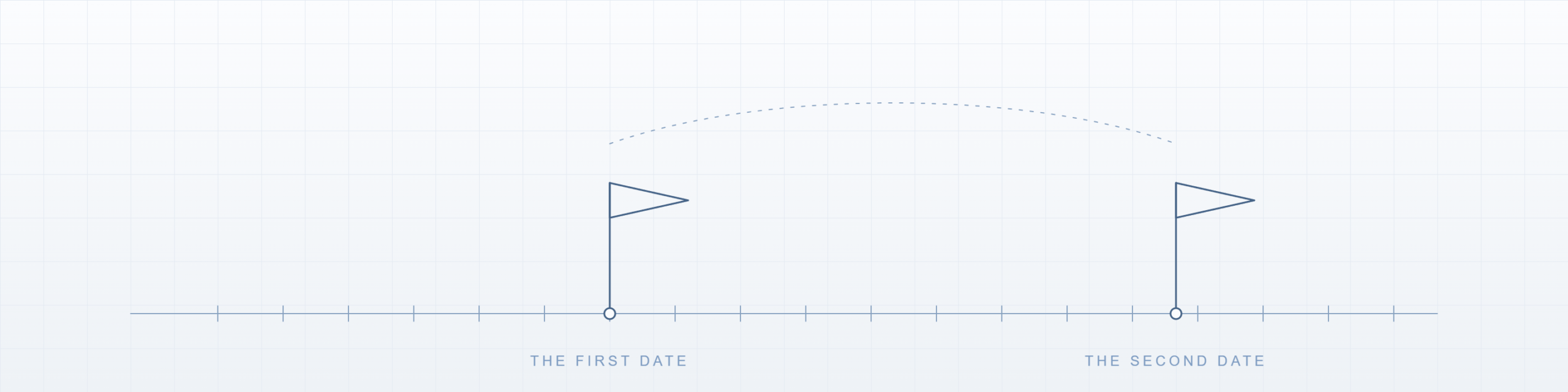
    A line drawing of a timeline with two flags planted at different points and joined by a dotted arc, labelled the first date and the second date.

    If you were born in 1953, you turn 73 during 2026, and 2026 is the first year for which the IRS requires a withdrawal from your traditional IRA, SEP or SIMPLE IRA, 401(k), 403(b), or 457 plan. The rule gives you a choice on the first one, and the choice is worth thinking through.

    The two deadlines

    Your first required minimum distribution is for 2026, but the law lets you defer it to April 1, 2027. Every later one is due by December 31 of its own year. So if you defer, you take the 2026 distribution and the 2027 distribution in the same calendar year, and both land on your 2027 return.

    Two distributions in one year is not always wrong. It is wrong when it pushes 2027 income into a higher bracket, over a Medicare income threshold, or into a higher share of Social Security being taxed. It can be right when 2026 is already a high-income year, for example the year you sold a business or took a final bonus, and 2027 will be quieter. The question is which of the two years has room.

    The Medicare point deserves its own sentence. Your 2029 Part B and Part D premiums will be set from your 2027 return. A doubled-up year does not just cost tax; it can cost a year of higher premiums two years later.

    How much

    Divide the account balance on December 31, 2025 by the factor for your age from the IRS Uniform Lifetime Table. At 73 the factor is 26.5. A $500,000 balance therefore requires $18,868 for 2026, and the balance on December 31, 2026 sets the 2027 figure at a factor of 25.5. If your spouse is your sole beneficiary and more than ten years younger, a different table applies and the figure is smaller. The RMD calculator on the Calculators page runs both.

    The withdrawal is computed account by account. IRAs can be aggregated and taken from any one of them; 401(k) and 403(b) balances cannot be satisfied from an IRA.

    Three things people get wrong

    • Roth accounts. A Roth IRA has no required distribution while you are alive, and since 2024 neither does a designated Roth account inside a 401(k) or 403(b). If the plan you are looking at is Roth, nothing is due.
    • Still working. If you are still employed by the sponsor of a 401(k) or 403(b) and you own less than 5% of the business, that plan can wait until you retire. This exception never applies to an IRA.
    • Younger cohorts. If you were born in 1960 or later, your age is 75, not 73. People born in 1959 sit in a gap between two provisions of the law; Treasury has proposed 73 but has not finalized it. There is time, because that group reaches 73 in 2032.

    What a miss costs

    The excise tax on a missed or short distribution is 25% of the shortfall, reduced to 10% if you correct it by the end of the second year after the year it was due. Custodians flag on Form 5498 that a distribution is required for the year, so a miss is visible.

    The New Jersey angle

    New Jersey taxes IRA withdrawals, and the taxable part counts toward the $150,000 total income test that decides whether you keep the state pension exclusion at all. A doubled-up year can push a couple from a full exclusion to none. Social Security is not in that test, and a public pension from PERS or TPAF is, so run the year before you choose. The pension exclusion checker on the Calculators page shows where a given total income lands.

    What to do now

    Pull the December 31, 2025 balances for every pre-tax account, compute the 2026 figure, and estimate 2026 and 2027 income with and without deferral. If you would rather someone did that with you, start here.


    Reviewed September 12, 2026. Sources: IRS, Retirement plan and IRA required minimum distributions FAQs; Treasury Regulation section 1.401(a)(9)-9 (Uniform Lifetime Table); SECURE 2.0 Act sections 107 and 302.

    This article is general educational information and is not tax advice. Distribution ages, tables and penalties are set by federal law and regulation and can change. Confirm your own figures with your custodian and your tax preparer before acting.

    This page is general. Your situation is not.

    The first distribution has two deadlines rather than one, and taking both in the same year can move you into a higher bracket. We can cover it in a short conversation, at no charge and with no obligation.

    Book your Retirement ReviewNot ready to book? Answer a few questions about your situation, or send a message.

    Booking is handled through Rosefinch Investment Advisors. North Jersey Retirement is not affiliated with, endorsed by, or sponsored by any government agency, retirement system, plan sponsor, or employer named on this site.

  • The Social Security COLA is announced in October. Here is what it will and will not tell you

    The Social Security COLA is announced in October. Here is what it will and will not tell you

    A line drawing of nine bars rising gently from left to right, joined by a line that continues upward past the last one, labelled each year, a little more.

    In the second half of October, when the Bureau of Labor Statistics publishes the September consumer price index, Social Security announces the cost-of-living adjustment for the following year. The 2026 adjustment was 2.8%, announced on October 24, 2025. The 2027 figure will arrive on the same schedule, and the coverage will treat it as news. What it changes was largely knowable.

    How the number is made

    The adjustment is the percentage rise in the CPI-W, the index for urban wage earners, from the third quarter of one year to the third quarter of the next. It is not a policy choice and it is not negotiated; it is the formula in the Social Security Act. It applies to every benefit in payment from the January check, and, through the indexing of the benefit formula, to the benefits of people who have not yet claimed.

    What else moves with it

    The same announcement resets the figures that shape planning for people still working. For 2026 the taxable maximum, the wage level above which no Social Security tax is due and no benefit is earned, rose to $184,500. The earnings test, which withholds benefits from people who claim before full retirement age and keep working, was set at $24,480 for the year, with $1 withheld for every $2 above it, and $65,160 in the year you reach full retirement age, with $1 withheld for every $3. The average retired worker’s benefit rose from $2,015 to $2,071 a month. Each of these will be restated for 2027 in the October release.

    What it does not tell you

    It does not tell you what your check will do. The Part B premium is deducted from most Social Security payments, and the 2027 premium is announced separately, in the fall. A 2.8% increase on a $2,071 benefit is $58; a Part B increase of a similar size absorbs most of it. The law’s hold-harmless rule stops the premium rise from reducing your net check below the prior month’s, if the premium is deducted from your benefit and you pay no income-related surcharge, but it does not promise a rise.

    It does not tell you when to claim. A COLA applies whether you claim at 62, at full retirement age or at 70, and the delayed retirement credits of 8% a year between full retirement age and 70 are added on top of it. The adjustment never makes claiming early cheaper. And it does not tell you what inflation did to you personally; the CPI-W is a wage earners’ basket, and a retiree’s spending on medical care and housing can run ahead of it or behind it.

    The North Jersey angle

    New Jersey does not tax Social Security, so the adjustment arrives without a state tax cost and does not count toward the $150,000 total income test for the pension exclusion. One number in the release does reach public employees directly: the pensionable salary cap for PERS and TPAF members in Tiers 2 and later is tied to the Social Security taxable maximum, $184,500 for 2026, so a rise in that figure raises the salary that counts toward your allowance.

    What to do with the announcement

    Read your own record rather than the headline. A my Social Security account at ssa.gov shows your earnings history and the benefit at each claiming age on your actual record, which is the figure that matters; the Social Security Claiming page explains how to read it. If you want to think through claiming age alongside a pension and the tax picture, start here.


    Reviewed September 12, 2026. Sources: Social Security Administration, 2026 Cost-of-Living Adjustment fact sheet and press release of October 24, 2025; Social Security Act section 215(i).

    This article is general educational information and is not advice about when to claim. Adjustments, limits and premiums are set by federal law and change every year. Confirm current figures with Social Security before acting.

    This page is general. Your situation is not.

    The adjustment changes the number, and it does not change the claiming decision underneath it. We can cover it in a short conversation, at no charge and with no obligation.

    Book your Social Security ReviewNot ready to book? Answer a few questions about your situation, or send a message.

    Booking is handled through Rosefinch Investment Advisors. North Jersey Retirement is not affiliated with, endorsed by, or sponsored by any government agency, retirement system, plan sponsor, or employer named on this site.
  • The $150,000 line: why a December IRA withdrawal can cost a New Jersey retiree the whole pension exclusion

    The $150,000 line: why a December IRA withdrawal can cost a New Jersey retiree the whole pension exclusion

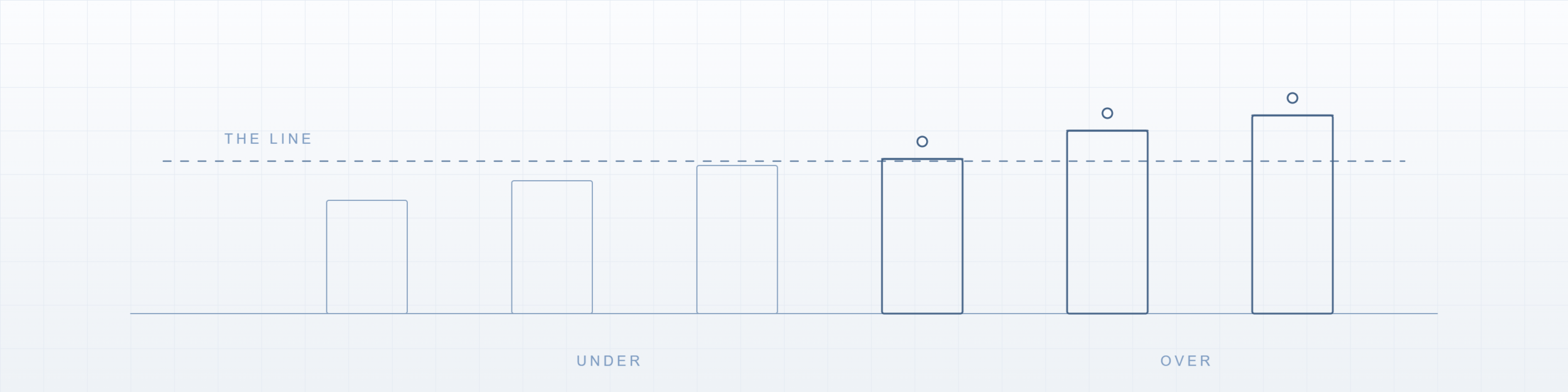
    A line drawing of six bars of increasing height against a dashed horizontal line, the last three crossing above it, labelled under and over.

    New Jersey’s pension exclusion is one of the most valuable retirement tax rules in the state and one of the least understood, because it does not phase out the way people expect. It steps down, and then it disappears. The step that matters most is at $150,000 of total income, and the withdrawal that pushes a household over it can be the one taken in December.

    The rule

    If you or your spouse are 62 or older, or disabled under Social Security’s definition, on December 31, you can exclude taxable pension, annuity and IRA income up to $100,000 on a joint return, $75,000 for a single filer, head of household or qualifying surviving spouse, and $50,000 if married filing separately. That full amount is available only when your total income for the year is $100,000 or less.

    Between $100,000 and $125,000 of total income, the exclusion becomes a percentage of your pension income: 50% joint, 37.5% single, 25% separate. Between $125,000 and $150,000 it halves again: 25%, 18.75% and 12.5%. Above $150,000 there is no exclusion. The test is on the whole of your total income, so one dollar over $150,000 does not cost you one dollar of exclusion; it costs you all of it.

    What counts toward the line

    Total income for this test is line 27 of the NJ-1040, which is everything New Jersey taxes: wages, the taxable part of pension and IRA withdrawals, interest, dividends, capital gains, rental income and business income. Social Security is not New Jersey income and is not in the test. Your PERS or TPAF allowance is in it. A Roth conversion is in it, because New Jersey taxes the conversion in the year you make it, apart from the return of contributions you already paid state tax on.

    So a couple with a $70,000 public pension, $40,000 of dividends and interest, and an IRA withdrawal of $35,000 sits at $145,000 and keeps 25% of the exclusion. Add a $10,000 withdrawal in December for a car, and they are at $155,000, the exclusion is gone, and the whole $105,000 of pension and IRA income is taxed. The December withdrawal did not cost tax on $10,000. It cost tax on the exclusion it destroyed.

    The year-end move

    Estimate your total income before you take anything else in November and December. If you are under $150,000 with room to spare, nothing changes. If you are close, the choices are to take the withdrawal in January instead, to take it from a Roth account that New Jersey does not tax, to defer a capital gain, or to accept the loss knowingly because the cash is needed. What you should not do is find out in April. A required minimum distribution still has to be taken by December 31, so if one is pending it should be in the estimate first.

    The same logic runs the other way for Roth conversions. A conversion in a year you are already over $150,000 costs nothing extra in exclusion, because there is none left to lose; a conversion in a year you are at $120,000 can cost a band. Model the year, not the transaction.

    The calculator

    The pension exclusion checker on the Calculators page takes your filing status, total income and pension income and returns the exclusion you keep and the amount of room before the next step down. The New Jersey Retirement Taxes page covers the rest of the return. If you would like the year-end estimate run with you, start here.


    Reviewed September 12, 2026. Sources: N.J.S.A. 54A:6-10; New Jersey Division of Taxation, GIT-1&2 Retirement Income (rev. January 2026); NJ-1040 instructions, lines 27 and 28.

    This article is general educational information and is not tax advice. Exclusion amounts, income bands and line references are set by New Jersey law and can change. Confirm current figures with the New Jersey Division of Taxation and your tax preparer before acting.

    This page is general. Your situation is not.

    The exclusion is lost in full once total income crosses the line, and a December withdrawal is settled for that year. We can cover it in a short conversation, at no charge and with no obligation.

    Book your Retirement ReviewNot ready to book? Answer a few questions about your situation, or send a message.

    Booking is handled through Rosefinch Investment Advisors. North Jersey Retirement is not affiliated with, endorsed by, or sponsored by any government agency, retirement system, plan sponsor, or employer named on this site.

  • Rates went up this year. Your pension lump-sum offer probably went down

    Rates went up this year. Your pension lump-sum offer probably went down

    A line drawing of a balance scale tilted so that the pan labelled rates sits high and the pan labelled the offer sits low.

    If you have a legacy pension from a corporate employer and the plan offers a lump sum instead of the monthly benefit, the size of that lump sum is not a negotiation. It is an arithmetic result of your promised monthly amount, an IRS mortality table, and three interest rates that the IRS publishes every month under section 417(e)(3) of the tax code. When those rates rise, the lump sum for the same pension falls.

    What moved

    In January 2026 the three segment rates were 4.03%, 5.20% and 6.12%. For July 2026, the most recent month published, they were 4.62%, 5.62% and 6.51%. The first rate discounts payments in the first five years, the second covers years five to twenty, and the third everything after.

    Using the IRS mortality table that applies for 2026, a $2,000 a month single-life pension starting at 65 is worth about $309,100 at the January rates and about $296,000 at the July rates, roughly 4.2% less for the identical promise. At 60 the gap is nearer 4.7%, because more of the payments sit in the later, higher-rate segments. These are illustrations from the published tables, not a quote from any plan.

    Which month your plan uses

    Plans do not use the current month. Each plan document names a lookback month and a stability period; one design fixes the lump-sum basis for a whole calendar year from the rates of a month in the prior year, for example August, October or November. That has two consequences. First, if your plan’s 2027 basis is set from a late-2026 month, the offers you see next year will reflect this year’s higher rates. Second, if you are already eligible to retire, the offer available in 2026 was set from a 2025 month, and it may be the larger of the two. The plan document states the month and the period, and the plan administrator can tell you which apply to you; ask before you rely on an offer.

    Smaller lump sum does not mean take the pension

    A lower lump sum is the same promise priced at a higher rate, so in principle the two are still equivalent. The choice turns on things the formula ignores: your health and your spouse’s, whether the plan is well funded and what the Pension Benefit Guaranty Corporation would cover if it were not, whether you need the money to be flexible or need it to be automatic, and what the lump sum would have to earn to replace the pension for as long as you both live. On the last point, the annuity calculator on the Calculators page turns a balance back into a monthly figure on the same IRS basis, so you can compare a lump sum against what it would buy.

    Who this applies to in North Jersey

    This is a corporate-plan decision. PERS and TPAF do not offer a lump sum in place of the monthly allowance; the choices there are the survivor options at retirement. Where the question does arise locally is with a legacy pension from a pharmaceutical, telecom or financial employer, and with hospital systems that have frozen a defined benefit plan. New Jersey taxes both the pension and a rolled-over lump sum when withdrawn, and either counts toward the $150,000 total income test for the state pension exclusion.

    If an offer is on your desk

    Get the plan’s relative value disclosure, the lookback month, and the monthly benefit at your normal retirement age, then compare the offer to what the same monthly amount costs on the open market. If you would like that comparison run with you, start here.


    Reviewed September 12, 2026. Sources: IRS Notice 2026-51 (July 2026 segment rates, Internal Revenue Bulletin 2026-38); IRS minimum present value segment rates table; IRS Notice 2025-40 (applicable mortality table for 2026); Internal Revenue Code section 417(e)(3).

    This article is general educational information and is not investment or tax advice. The illustrations use published IRS tables and are not a quote from any plan; your plan’s own basis, lookback month and benefit formula govern. Confirm figures with your plan administrator before deciding.

    Several of these choices cannot be undone.

    A lump sum offer is priced off rates that move month to month, and the election is permanent once made. We can cover it in a short conversation, at no charge and with no obligation.

    Book your Pension ReviewNot ready to book? Answer a few questions about your situation, or send a message.

    Booking is handled through Rosefinch Investment Advisors. North Jersey Retirement is not affiliated with, endorsed by, or sponsored by any government agency, retirement system, plan sponsor, or employer named on this site.
  • Retiring from PERS or TPAF in 2027? The application clock starts now

    Retiring from PERS or TPAF in 2027? The application clock starts now

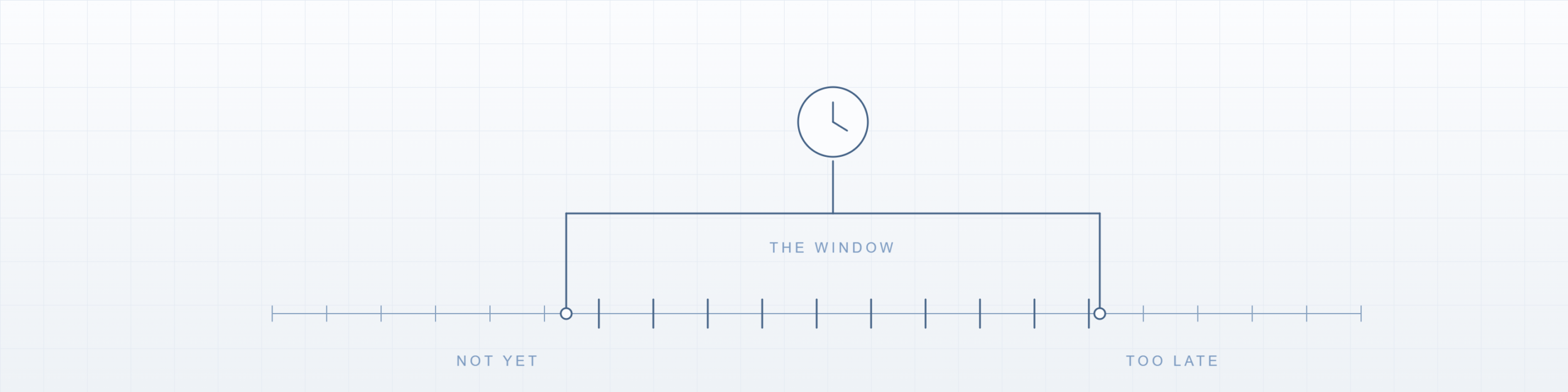
    A line drawing of a timeline with a bracketed window in the middle and a clock above it, labelled not yet, the window, and too late.

    If you plan to retire from a North Jersey county job, a school district, or state service in 2027, the paperwork is more time-sensitive than the decision. The Division of Pensions and Benefits publishes the rules in Fact Sheet #4, and the dates in it are firm.

    When to file

    The application is filed online through the Member Benefits Online System, MBOS. Paper applications are not accepted. You may file up to one year before your retirement date, and the Division recommends four to six months. It cannot be filed later than the retirement date itself: under no circumstances can a retirement take effect before the date the online application is received. A January 1 retirement filed on January 3 becomes a February 1 retirement.

    All PERS and TPAF retirements are effective on the first of a month. For a teacher that can mean July 1 or September 1, and the school year contract can decide which; for a county employee it is whichever first of the month follows the last day worked. The month you choose sets the final salary period, the service credit, and, if you are under normal retirement age for your tier, the age reduction. The pension estimator on the Calculators page shows what one more month or one more year of service does to the figure.

    What to have ready

    • Proof of age: a photocopy of a birth certificate with a visible seal, a passport, a current driver’s license or naturalization papers. Do not send originals.
    • Your beneficiary and option decision. The payment option chosen on the application governs what a survivor receives, and it is the one part of this process that is difficult to revisit.
    • An estimate. Members within two years of retirement can run one in MBOS from the current account record, which is more accurate than any outside calculation, including ours.

    The window to change your mind

    You may change or cancel a retirement up to 30 days after your retirement date, or 30 days after the Board of Trustees approves it, whichever is later. After that, the retirement and the option are final. Because the Board meets monthly and approval can lag the retirement date, the practical window can be the first month of retirement. If you are considering a different option or date, decide before the first check, not after.

    What happens to the money

    The retirement is not final until the Board of Trustees approves it, and the first payment follows approval, so it can arrive after the first of the month you retired. Plan for one month of bridging cash. The allowance is New Jersey taxable income and counts toward the $150,000 total income test for the state pension exclusion; the first retirement year, with a final salary and a first pension in the same year, is the one most likely to cross it. The county employees and teachers pages cover the tier rules in full.

    A working timeline

    Twelve months out, run the MBOS estimate and settle the date. Six months out, file, with proof of age. Three months out, confirm health benefits continuation with your employer and, if you are 65 or older, your Medicare enrollment. Thirty days after the date, the decision is final. If you would like to walk through the option choice before filing, start here.


    Reviewed September 12, 2026. Sources: New Jersey Division of Pensions and Benefits, Fact Sheet #4, Retirement: How to Apply (rev. February 2026); Member Benefits Online System.

    This article is general educational information and is not advice about your retirement application. Filing rules, deadlines and option terms are set by the Division of Pensions and Benefits and can change. Confirm your own dates with the Division and your employer before filing.

    Several of these choices cannot be undone.

    The filing date sets the payment start, and the option election that goes with it cannot be changed afterwards. We can cover it in a short conversation, at no charge and with no obligation.

    Book your Pension ReviewNot ready to book? Answer a few questions about your situation, or send a message.

    Booking is handled through Rosefinch Investment Advisors. North Jersey Retirement is not affiliated with, endorsed by, or sponsored by any government agency, retirement system, plan sponsor, or employer named on this site.